Search This Blog

Showing posts with label teachers. Show all posts

Tuesday, December 26, 2017

Michigan Supreme Court Orders $550 Refund To Teachers

 ‘Major victory’ for teachers: $550M refund
Jonathan Oosting, Detroit News Lansing Bureau
Michigan Education Association President Paula Herbart
Rick Snyder
 Lansing — Michigan plans to refund nearly 275,000 public school employees a combined $550 million plus interest for retiree healthcare paycheck deductions deemed unconstitutional by the state Supreme Court, a ruling hailed by unions as a “major victory” for educators.

In a unanimous 6-0 decision released Wednesday, justices ordered the refunds and upheld a Court of Appeals ruling that a 2010 Michigan law violated contract clauses of the state and federal constitutions by involuntarily reducing pay for teachers and other school employees by 3 percent to fund retiree health care benefits.

Because the paycheck deductions were unconstitutional, funds collected from more than 200,000 school employees before a replacement law took effect in 2012 “must be refunded to the plaintiffs in accordance with the Court of Appeals judgment,” justices ruled.

Republican Gov. Rick Snyder’s administration is moving ahead with refunds after losing the court battle, but it’s not immediately clear how long the process will take.

The state will distribute refunds to individual school districts, which will then be tasked with repaying employees, said Kurt Weiss, a spokesman for the Michigan Office of Retirement Services. The total refund will include interest, he said, meaning the state will send roughly $554 million to districts.

“I cannot imagine a better pre-holiday gift to Michigan’s school employees than getting their hard-earned money returned to them,” Michigan Education Association President Paula Herbart said in a statement, praising the work her union and the state chapter of the American Federation of Teachers did on behalf of their members.

“This reinforces why being a member of a union matters – working collectively, we won this case that no individual could have fought for themselves,” she said.

Refunds are expected to average about $2,000 per person but will vary based on how much each school employee earned during the roughly two-year window of illegal deductions.

A person who made $50,000 a year would be in line for a $3,000 refund plus interest, according to MEA spokesman Doug Pratt. A veteran teacher will likely receive a larger refund than a bus driver or paraprofessional, he noted.

Justice Beth Clement, appointed to the bench by Republican Gov. Rick Snyder in November, did not participate in the new supreme court decision. Unions that sued the state on behalf of teachers had asked her to sit out the case because she served as Snyder’s chief legal counsel when he decided to appeal the case to the Supreme Court.

Snyder said Wednesday he was “pleased that taxpayers will have resolution” to a long-running dispute over the 2010 law signed by his predecessor, former Gov. Jennifer Granholm, a Democrat. The law was in effect from July 2010 until September 2012, when Snyder signed a replacement version upheld by the Supreme Court that year.

“The funding has been held in escrow, so Michigan will continue to have a balanced budget,” the governor said in a statement. “We will not need to raise new revenue or remove funding from other priorities to refund the money that was collected for retirement health care.”

There is no clear timeline for when refunds may be distributed. The Office of Retirement Services is working to implement the Supreme Court ruling and return contributions to the school districts where they were initially withheld from, according to Weiss.

The state will provide additional information to school districts and employees “regarding the timing and amounts for forthcoming refunds as soon as it becomes available,” Weiss said.

The MEA “will be in close contact with members” who may qualify for refunds, Pratt said, noting the state is still working out the logistics.

Wednesday’s court ruling and the pending refunds cap a nearly eight-year battle over the paycheck deduction law. One of the lead plaintiffs in the suit against the state, veteran Lansing teacher Deborah McMillin, died before the case was resolved due to complications from a knee replacement surgery. The state had deducted roughly $4,000 from her paychecks, according to the MEA.

Snyder appealed the case to the Michigan Supreme Court last year without the help of Attorney General Bill Schuette, whose office had defended the state before the Court of Appeals but declined further involvement. Instead, Snyder hired outside attorneys to represent him as special assistant attorneys general.

AFT Michigan president David Hecker said Wednesday he hopes Snyder and Schuette now work with the unions to ensure school employees get their refunds in a timely fashion.

“Michigan’s school employees have waited eight long years to get their hard-earned money returned to them – no further delay is necessary,” Hecker said in a statement.

The 2010 law was signed by Granholm amid a budget shortfall after approval by a Democratic-controlled House and Republican-dominated Senate.

A Republican-controlled Legislature amended the law in 2012 to stave off a continued legal challenge, but the teacher unions continued to fight in the courts for a refund of money deducted from employee checks over the two-year period.

The Snyder administration held $549,871,147 collected from school employees in escrow while the legal battle played out. The funds earned $4,189,341 in interest over that period, according to Weiss, who said the state will refund districts a total of $554,060,489.

Staff writer Jennifer Chambers contributed.
joosting@detroitnews.com

Friday, July 3, 2015

Carol Burris on Using Test Scores and Common Core To Evaluate Teachers

Carol Burris
   

Principal’s last advice: Let’s move beyond the rhetoric and really question the Common Core

Value-added scores are a sham metric. They give top teachers negative scores!


Core Debate by Carol Burris, July 2, 2015

Dear Jayne,
I am writing this letter the day after my last graduation ceremony. The past week has been difficult—full of tearful goodbyes. Although I am certain that my decision to retire was the right one, leaving a school that I love so much has been very painful. But, as I said to the Class of 2015 in my address, quoting Winnie the Pooh—“how lucky I am to have something that makes saying goodbye so hard.”

Your last letter acknowledged our mutual concern about the evaluation of teachers by student test data. Even if it were a perfect measure, and it is far from perfect, the unintended consequences of using test scores in this manner would never be worth the price. Back in 1976, social scientist Donald Campbell predicted what would happen if standardized tests became high-stakes. He wrote, “When test scores become the goal of the teaching process, they both lose their value as indicators of educational status and distort the educational process in undesirable ways.” Certainly, that is a worry you and I share.

You asked what accountability system produces a bell curve in which teachers are measured against each other. It’s called the “VAM” — for value-added model — and each teacher receives a score that is generated by comparing the scores of his or her students with students across the state of Florida, who take the same test and have similar characteristics. That comparison then produces a “bell curve” because scores cluster around the average score, which is converted into the five Florida categories of teacher VAM performance. It may sound reasonable but it produces some inexplicable results where excellent teachers receive bad scores. This was the case of the 2014 Hillsborough Teacher of the Year, who was judged so bad by VAM, his score was negative! We use a similar process in New York, although growth scores are only generated for 3-8 tests.

Jayne, while we both disagree with using student test scores to evaluate teachers, I am wary when you suggest that “multiple measures” and “dashboards” are the solution. Would you be comfortable with test scores being 30% of a teacher’s evaluation? I would not. If using them as a metric comes at the cost of narrowing curriculum and teaching to the test, why would we want to include them at all?

I am not discounting the importance of using student achievement in assessing teacher quality and in helping teachers improve. Prior to the mandated use of scores, I used achievement results to help guide my observations, review teacher lesson plans and design professional development. I worry that vague terms like “multiple measures” lead non-educators to conclude that, if more than one test were used to produce VAM scores, or if you also included observations, using test data is sound practice.

Related: Blended learning emerges as a leading trend in education technology, report says

Now back to the Common Core. I am not sure what you mean when you say that I “personified” the standards and that I believe the Common Core is “the root of the problems we are facing in education.” The Common Core is but one part of a failed reform strategy. The Common Core, teacher evaluation using student tests scores, Common Core tests, the expansion of charter schools and other disruptive change strategies were pushed by the $4.35 billion competitive grant known as Race to the Top. All are presented as interconnected parts of a school improvement plan.

I do agree that other policies associated with the Common Core have negatively impacted the implementation of the standards. I also am (and have always been) a big believer in college and career readiness as our goal. Where we disagree is that I don’t believe that the Common Core standards, even without bad policy, will do the job.

Here is an example that we in New York are living through now. The Common Core algebra test was given in early June. New York students generally take algebra in eighth grade (accelerated students) or ninth grade. Some of our very best students were in tears as they struggled to complete it. Concerns went far beyond our district. Eric Cunningham is a veteran algebra teacher from upstate New York. He wrote an email to parents explaining how difficult the test was and how illogical the curve against which the tests were scored.

First, let’s look at the level of difficulty. Eric refers to question 24, a compound inequality problem which you can find here. Eric is correct when he says this topic was previously taught in New York’s Algebra 2/Trigonometry course, the third course in the high school sequence. Question 24 is now fair game on the Common Core algebra test, which is the first course in the high school sequence, because it tests the Common Core standard CED.A1, which you can find here.

Our students also had a lot of difficulty with question 18 which involved a quadratic equation. The solution included a fraction. My math teacher told me that not only was the topic previously taught in Algebra 2 Trigonometry, but that the inclusion of the fraction made the question inappropriate for even the Algebra 2 course. Could the question be considered an assessment of a Common Core standard? Yes, because there are Common Core math standards that require Algebra 1 students to solve quadratic equations by completing the square.

Related: With Common Core tests, a lot at stake for first-year principal

This level of detail is necessary to help readers understand the problem. We do our students a terrible disservice when we fail to recognize the inappropriateness of many of the standards and accept them in the name of “college readiness.”

The problems with the test go beyond these two questions. Let’s look at the college readiness score bands. It is not difficult to pass the test. For a score of 65%, students need to get 30 of the possible 86 points—which represents getting less than 35% of the exam correct. Given that most of the exam is multiple choice, a good guesser who can do the simpler questions will pass. To get to the Common Core “college readiness” passing (level 4) a student must get 65% of the test right. That “college readiness score” will be the new score needed to graduate high school in just a few years. On the surface, that sounds reasonable. But let’s look at the outcome.

Only 48% of Rockville Centre first-time test takers achieved that score. That excludes students who previously took and failed the test—if they were included the percentage would be lower still.

This year South Side High School had no dropouts and our four-year graduation rate was 98%. Should we conclude that only about half of the graduates of my high school are college-ready, and that in the future, only 48% should graduate based on the results of this test?

Related: Are new Common Core tests really better than the old multiple-choice tests?

Every other indicator contradicts that conclusion. Every year, over 70% of our graduates pass an International Baccalaureate exam in mathematics. When I checked last fall, 92% of our entire Class of 2012 was successfully enrolled in college two years after graduation. My summer survey of whether students were required to take remediation resulted in only a handful of students. All were either English language learners or students with disabilities.

So, Jayne, what should I believe? The Common Core test results, which say over half of our students are not prepared for college, or over a decade’s worth of evidence that tells me nearly all of them are? I understand that my school is well-resourced with only a 16% poverty rate. But surely the juxtaposition of Common Core scores with my school’s longstanding track record of producing college-ready students indicates that there is something wrong with the Common Core standards as measured by Common Core-aligned tests. It is time we move beyond the rhetoric and critically question the assumptions on which these reforms rest.

I thank you so much for your willingness to enter this dialogue with me. I have no doubt that you and I both deeply believe in school improvement and our responsibility to create well-educated, caring and thoughtful young adults. While we disagree on the value of the Common Core, my guess is that our core values are far more similar than different. Good luck to you, Jayne, and the very best to you and your wonderful school.

Carol

Monday, May 25, 2015

Judge Milton Shadur Gives The Chicago Teachers Union and Three Teachers Certification as a Class Action Against Racism by The Chicago Board of Education


Judge Milton Shadur

#BlackTeachersMatter. The suit against CPS and the larger national context.

MAY 25, 2015
Screen Shot 2015-05-25 at 9.05.21 AM
Yesterday I posted on U.S. Judge Milton Shadur’s ruling that African American teachers who were laid off by the Chicago Public School constituted a class.
In other words, African American teachers were targeted.
The law suit will now proceed to trial and possible damages.
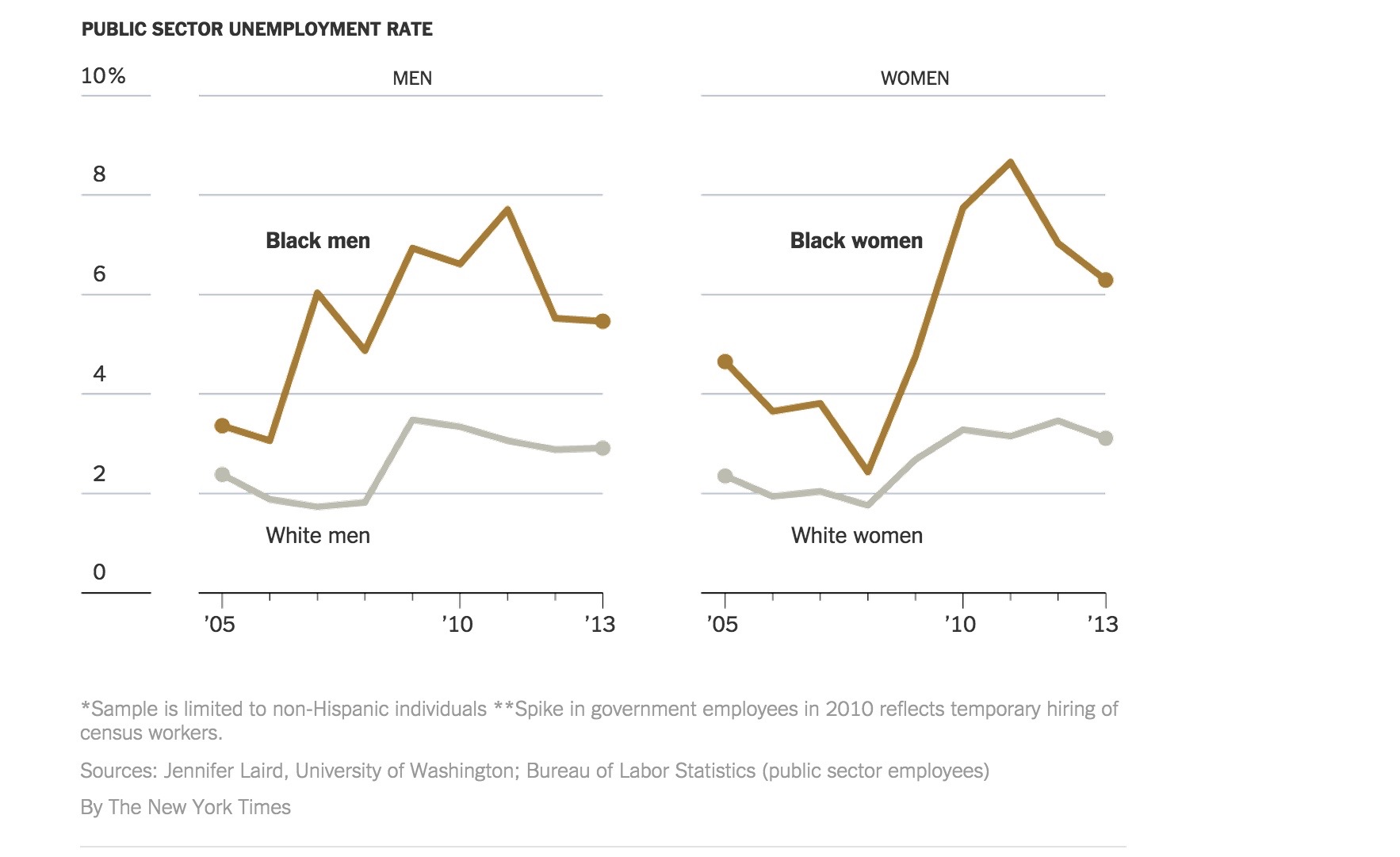
Today’s NY Times reports that public sector jobs have vanished.
And who have been the victims?
Because blacks hold a disproportionate share of the jobs, relative to their share of the population, the cutbacks naturally hit them harder.
But black workers overall, women in particular, also lost their jobs at a higher rate than whites, Ms. Laird found. There was a “double disadvantage for black public sector workers,” she said. “They are concentrated in a shrinking sector of the economy, and they are substantially more likely than other public sector workers to be without work.”

#BlackTeachersMatter. U.S. Judge Milton Shadur calls CPS response to teachers discrimination lawsuit, “totally irresponsible.”

In 2011 the Chicago school board carried out large-scale layoffs of teachers and paraprofessionals.
African American board employees bore the brunt of the layoffs just as the board’s closing of neighborhood public schools two years ago mainly impacted African American communities.
As a result of the layoffs in 2011 the Chicago Teachers Union and three impacted teachers filed suit.

CTU President Karen Lewis speaking at Daley Plaza during the protest of
Chicago school closings, 2013
As I understand it, a law suit like this has three components.  First, the plaintiffs must show that they represent a class of people by a preponderance of the evidence. They were not just individual victims. It was not a coincidence that they were mostly African American. The judge is asked to certify that it is a class action before the case can move on to trial and a ruling of damages.
On Friday, Senior U.S. Judge Milton Shadur ruled in favor of the CTU and the three teachers.
However Judge Shadur didn’t just rule in the plaintiff’s favor.
The Judge was scathing in his rebuke of the CPS board.
“What does Board say on the critical issue of disparate impact in this critical case? Here are Amended Complaint 7 and 8 and Board’s “responses”:
7. In June, 2011, the Board terminated the employment of 931 classroom teachers through a round of layoffs. 480 of these teachers were tenured. African Americans made up 42% of the tenure teachers terminated, although constituting less than 29% of all CPS tenured teachers.
ANSWER: The Board denies the allegations of paragraph 7.
8. Defendant’s pattern and practice of targeting schools with high African American teaching populations for layoffs has a disparate impact on African American tenured teachers and staff.
ANSWER: The Board denies the allegations of paragraph 8 and further states that the Board does not “target” schools, or any demographic of teachers or staff, for layoffs under any circumstance.
And that’s it — the sum total of Board’s purported input on the subject of disparate impact, which is of course the essential linchpin for class certification purposes. Board has said not a word, then or since then, about the claimed basis for its unsupported ipse dixit “denial.”
In candor, that is totally irresponsible. This action has been pending for just short of 2-1/2 years: Plaintiffs filed their initial Complaint on December 26, 2012, and Board has known from day one about plaintiffs’ disparate impact contention and about the asserted numbers upon which those contentions rely.”
Judge Shadur’s ruling and order then proceeded through each requirement for certification as a class and sided with the teachers on each one.
He concluded:
Board’s only challenge to certification under Rule 23(b)(3) is its broken-record-type reassertion that individual principals fired plaintiffs, so that common questions do not predominate on that skewed premise. And that means Board has simply failed to raise any substantial challenge at all to plaintiffs’ arguments.
The case now will proceed to trial and damages.

Tuesday, August 12, 2014

Peter Greene: Without Tenure....

LINK
Civilians need to understand-- the biggest problem with the destruction of tenure is not that a handful of teachers will lose their jobs, but that entire buildings full of teachers will lose the freedom to do their jobs well.
Peter Greene
August 5, 2014

Yesterday, twitter blew up with responses to Whoopi Goldberg and the View having one more uninformed discussion of tenure (and, really, we need to talk about why education discussions keep being driven by the work of comedians).
 
"#Without Tenure I can be fired for...." was the tweet template of the day, and even though I rode that bus for a bit, it occurs to me this morning that it misses the point.
 
It's true that in the absence of tenure, teachers can (and are) fired for all manner of ridiculous things. That's unjust and unfair. As some folks never tire of pointing out, that kind of injustice is endemic in many jobs (Why people would think that the response to injustice is to demand more injustice for more people is a whole conversation of its own). That doesn't change a thing. Firing a teacher for standing up for a student or attending the wrong church or being too far up the pay scale-- those would all be injustices. But as bad as that would be, it's not the feature of a tenureless world that would most damage education.
 
It's not the firing. It's the threat of firing.
 
Firing ends a teacher's career. The threat of firing allows other people to control every day of that teacher's career.
 
The threat of firing is the great "Do this or else..." It takes all the powerful people a teacher must deal with and arms each one with a nuclear device.
 
Give my child the lead in the school play, or else. Stop assigning homework to those kids, or else. Implement these bad practices, or else. Keep quiet about how we are going to spend the taxpayers' money, or else. Forget about the bullying you saw, or else. Don't speak up about administration conduct, or else. Teach these materials even though you know they're wrong, or else. Stop advocating for your students, or else. 
 
Firing simply stops a teacher from doing her job.
 
The threat of firing coerces her into doing the job poorly.
 
The lack of tenure, of due process, of any requirement that a school district only fire teachers for some actual legitimate reason-- it interferes with teachers' ability to do the job they were hired to do.  It forces teachers to work under a chilling cloud where their best professional judgment, their desire to advocate for and help students, their ability to speak out and stand up are all smothered by people with the power to say, "Do as I tell you, or else."
 
Civilians need to understand-- the biggest problem with the destruction of tenure is not that a handful of teachers will lose their jobs, but that entire buildings full of teachers will lose the freedom to do their jobs well.
 
We spent a lot of time in this country straightening out malpractice law issues, because we recognized that a doctor can't do his job well if his one concern is not getting sued into oblivion for a mistake. We created Good Samaritan laws because we don't want someone who could help in an emergency stand back and let The Worst happen because he doesn't want to get in trouble. 
 
As a country, we understand that certain kinds of jobs can't be done well unless we give the people who do those jobs the protections they need in order to do their jobs without fear of being ruined for using their best professional judgment. Not all jobs have those protections, because not all workers face those issues.
 
Teachers, who answer to a hundred different bosses, need their own special set of protections. Not to help them keep the job, but to help them do it. The public needs the assurance that teachers will not be protected from the consequences of incompetence (and administrators really need to step up-- behind every teacher who shouldn't have a job are administrators who aren't doing theirs). But the public also needs the assurance that some administrator or school board member or powerful citizen will not interfere with the work the public hired the teacher to do.
 
Tenure is that assurance. Without tenure, every teacher is the pawn and puppet of whoever happens to be the most powerful person in the building today. Without tenure, anybody can shoulder his way into the classroom and declare, "You're going to do things my way, or else."
 
Tenure is not a crown and scepter for every teacher, to make them powerful and untouchable. Tenure is a bodyguard who stands at the classroom door and says, "You go ahead and teach, buddy. I'll make sure nobody interrupts just to mess with you." Taxpayers are paying us for our best professional judgment; the least they deserve is a system that allows us to give them what they're paying us for.
Posted by Portside on August 10, 2014

Friday, August 8, 2014

Randy L. Hoover, PHD: The PARCC & Common Core Business

PARCC & Common Core1
Randy L. Hoover, PhD
(2014)
The Common Core State Standards (CCSS) and the Partnership for Assessment of Readiness for College and Careers (PARCC) the are two sides of the same coin. The coin is the nationalization of academic standards. CCSS is the academic content, and PARRC is the vast standardized testing regimen that goes with it. Someone asked on the FAQ page if PARCC and CCSS would be like No Child Left Behind (NCLB) on steroids. It's a pretty good question, and the answer is pretty much a "yes," but the reason for the answer is a little more complicated because of the nature of PARCC and CCSS.
The Common Core has been the subject of contentious debate across a variety of interests. In order to cut through the tsunami of claims and counter claims in order to better understand the ramifications for teacher advocacy, we need to understand that there are two primary areas of focus in the debate. One is a focus on the standards themselves, and the other is on the ramifications beyond the standards.
From the point of view of teacher advocacy and the Common Core standards, the virtual absence of classroom teacher participation in the group developing the standards or in the group providing feedback on the standards speaks volumes about how teachers have been completely marginalized in the Common Core process. While it is good to have psychometricians, college professors, and others of professions related to schooling helping to develop standards, experienced classroom teachers know best what learners can do and learn. Yet the vast majority of the CCSS developers and reviewers were from the testing industry and special-interest groups. I could not find one classroom teacher in the approximately 30 members listed in the Common Core development group and could find only 1 classroom teacher listed in the feedback group. This Common Core reality is patently contrary to the principles of teacher advocacy. This absence of experienced classroom practitioners greatly diminishes the credibility of the final product.
It is impossible to imagine this kind of (non) representation occurring in other professions such as law, engineering, or medicine. The marginalization begs the question of why NEA and AFT did not appear to make loud and public complaint about this absurd situation. Unfortunately for teacher advocacy, NEA had again sided with the test-driven reform interests that dominated the development of CCSS. A quick visit to the NEA website reveals the union has been a strong and consistent supporter of the Common Core since its conception. The only negative aspect of NEA's rhetoric was NEA President Van Roekel's speech in February 2014 arguing that the problem with CCSS is that the implementation has been botched.
Another aspect of the Common Core standards themselves concerns the appropriateness of the standards in terms of their expectations for the students and the level of difficulty expected from PARCC. It is critical for teacher advocates to realize that "high expectations" has been a slogan of reformists since before NCLB. High expectations are not necessarily the same as reasonable expectations. The pedagogical issue seemingly excluded from CCSS is whether the standards are developmentally appropriate for the children at each grade level and subject area, not to mention children with special needs. Ironically, "high expectations" was the slogan companion to NCLB's 100 percent proficiency by 2013.
There are two primary motives behind the "high expectations" slogan. One is the set up that if higher expectations are not realized on the standardized test results, then it is the fault of inferior teachers. The other comes from the reality that the more students who fail, the greater the size the pool of cheap labor is available for corporate profits. Together, PARCC and CCSS are likely the highest pinnacle of sorting students for labor needs yet seen in America. The seeming paradox of wanting graduates who can fill the high-paying technical job needs of business and industry on one hand and wanting a cheap labor source for the lesser jobs on the other is very real. The PARCC-CCSS combination will most likely produce exactly those results, thus producing exactly what corporate America desires. Because PARCC will be no different from any other achievement test in terms of its actually measuring the socio-economic lived experience of those taking the test, the results are as predictable as they are inevitable. Tests like PARCC simply do not assess academic achievement, and therefore fail the psychometric conditions for test validity. (See paper onResearch Insights about the Validity of Standardized Tests in Ohio.)
This kind of public school exploitation is clearly at odds with the ideals of democratic public schooling just as it is at odds with ideals of teacher advocacy. The prime directive of teachers is always to do right by their students, empowering them to make their own choices in lifestyle and occupation. The corporate mentality that the purpose of public schools and their educators is to produce employees for the benefit of business profit has replaced the once-fundamental idea that schooling is to serve the students above all else. Instead of reaffirming the centrality of public schools in serving our democracy through enlightened and empowered citizens, the Common Core and all that comes with it reduce our children to mere chattel for servicing the economic desires of corporate America. In doing so, it also reduces the once-noble role of the teacher to that of deskilled labor creating the chattel corporate America wants so desperately.
From the teacher advocate point of view, both sides of the PARCC-CCSS coin are offensive for a number of reasons having nothing to do with being opposed to having academic standards. First, CCSS has a not-so-hidden agenda of nationalizing academic standards. The responsibility for public schools in America is historically and constitutionally the responsibility of each state, not the federal government. The reality of there being 50 separate sets of school laws and academic standards bothers the school reformists tremendously because it makes comparing test scores among the states much more difficult for them. It thwarts their desire for publicly rating, ranking, and grading school performance in order to keep the public on board for continuing divert billions of taxpayer monies into their own coffers.
Knowing how preoccupied the reformists are with test scores means they are resolute in getting everyone to take the same test so they can continue strengthening the yoke of pseudo accountability draped on American public schools and their educators. Given the significant anti-teacher results of No Child Left Behind (NCLB) and Race to the Top(RttT), one can only imagine the effects of nationalizing standards in terms of how teachers and public schools will be treated with PARCC scores as their performance outcome measure.
All of this is not an argument against the importance of having academic standards. It is an argument against the Common Core and its companion assessment. Thoughtfully and appropriately developed content standards are vital for teaching effectively and for use in authentic teacher evaluation because they form reasoned goals for the outcomes of curriculum and instruction. That being said, the agenda of CCSS has nothing to do with good teaching or authentic teacher evaluation. CCSS and its companion PARCC are about a variety of special-interest goals that represent huge profits for corporations such as Pearson and the allied test-prep and curriculum-materials corporations, more fodder for anti-public school/anti-teacher groups, and more phony data for corporate charter school initiatives. The PARCC-CCSS coin is extremely valuable in terms of profits; Pearson alone is expected to make more than a billion dollars over the next eight years if enough states sign on.
Nationalizing content standards greatly enhances the power of the reformists to control the public debate and discussion of accountability in order to perpetuate the same fictional claims that NCLB and state compliance legislation brought us. Similarly, nationalizing standards enhances the power of the federal government to regulate federal funding for schools based on school compliance and subsequent performance of state and local school systems. In this sense it will be like a mandatory Race to the Top with the pseudo accountability of value-added metrics being a central result of nationalization.
It is also inevitable and certainly intentional that PARCC scores will be the ultimate false proxy for school reform—ramping up the current NCLB and state false proxies that fictionalize public school performance across the 50 states. The public will again be sold the grand lie that test scores represent the condition of public education. They do not. Indeed, the single most powerful anti-teacher, anti-public school aspect of the school reformists is the false proxy. (See paper on the Metrics Machine & the False Proxy2.)
Together, PARCC and CCSS represent new levels of punishment for students and teachers alike. The testing regimen is extreme in both the amount of time required for testing and the level of difficulty of the PARCC test items. The exams will take eight hours for an average third-grader and just short of 10 hours for high school students. There will also be optional midyear tests to track if students and their teachers are on track. Also, there are plans to create tests for kindergarten,1st and 2nd graders, and 9th, 10th and 11th graders as well.
I would be remiss to not at least briefly mention the role of Bill Gates and his zealous, though mindless funding of the advancement of the CCSS-PARCC nationalization of standards. Gates may be a billionaire, but he is clueless when it comes to understanding education. Ever the buffoon when inside the education arena, he is an archetype of the corporate mentality that dominates the reform movement. Perhaps we need a national standard that teaches our children that money is not a proxy for one's personal intelligence. I would much sooner trust the professional judgment of those who have been working in schools and classrooms. To quote Ravitch,
Common Core testing will turn out to be the money pit that consumed American education. The sooner it dies, the sooner schools and teachers will be freed of the Giant Federal Accountability Plan hatched in secret and foisted upon our nation's schools. And when it does die, teachers will have more time to do their job and to use their professional judgment to do what is best for each student. (Diane Ravitch, 7/3/2014)

1 The primary reference for much of this paper comes from Diane Ravitch. I strongly recommend reading her blog of 7/3/2014, "Good Riddance to the Common Core Tests." http://dianeravitch.net/2014/07/03/politico-plans-for-the-federal-tests-for-common-core-are-falling-apart
2 Also see Godin, S. (2012). Seth’s Blog. Retrieved from http://sethgodin.typepad.com/seths_blog/2012/11/avoiding-the-false-proxy-trap.html
and Regunberg, A. (2012). Education’s false proxy trap. Retrieved from
 http://www.golocalprov.com/news/aaronregunberg-educations-false-proxy-trap


Wednesday, June 11, 2014

Mark Naison: Why Teacher Tenure And Due Process Are Important


Brian Jones and Mark Naison
Why Teachers Need Tenure and Due Process:
LINK
Teaching is an incredibly "political" profession. The content of curriculum, as well as school budgets and hiring policies are the subject of intense debate from local school districts through legislators. Public officials, given a chance, will use schools as centers of patronage or places where they build political machines, and they will attempt to make teachers serve those ends if teachers do not have basic job protections. Then there are the parents. Some parents see all the needs of all children as foremost. Others will do anything to get special treatment for their child. If they are powerful, they will use that power to try to bend teachers to their will. I have seen this in action in schools I have worked in ( as well as sports leagues). Teachers need basic job protection to defend them from those parents, who exist, sometimes in small numbers, sometimes in large numbers in every school. Finally, teachers need protection from abusive administrators who are, thankfully, a minority, but do exist in every school district in the country. And these job protections, which protect teachers from abuse, intimidation, bribery, insider dealing and special influence, also protect children, because if teachers are bent to the will of powerful politicians, helicopter parents and abusive administrators, children will suffer. That is whey every society in the world with good schools has the kind of employment protections people here are challenging. And by the way, every single thing I have described above I have seen operating first hand