 |
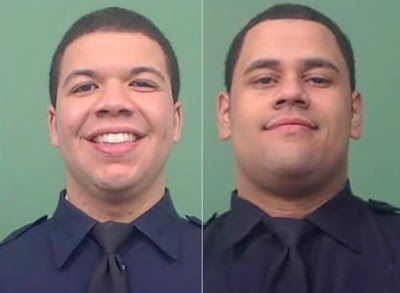
| Jason Rivera (left) and Wilbert More (right) |
We believe in our nation's finest, the men and women who serve to protect us all. Defunding the police is nonsense, built up by hysterical people who in the end profited greatly from the sheeple who followed this insane road to social disorder.
Should officers of the law be given additional training? Absolutely, training in what to do in panic-driven situations where people with guns may be having mentally unstable episodes is a good place for taxpayer money. Let's do that, pronto.
Betsy Combier
betsy.combier@gmail.com
Editor, ADVOCATZ.com
Editor, ADVOCATZ Blog
Editor, NYC Rubber Room Reporter
Editor, Parentadvocates.org
Editor, New York Court Corruption
Editor, National Public Voice
Editor, NYC Public Voice
Editor, Inside 3020-a Teacher Trials
Editor, Parentadvocates.org
Editor, New York Court Corruption
Editor, National Public Voice
Editor, NYC Public Voice
Editor, Inside 3020-a Teacher Trials
First, we mourn. Angrily, we mourn. For a man wielding a gun stolen in Baltimore five years ago — a grotesque weapon with a high-capacity magazine holding up to 40 rounds — has cut down two of New York’s Finest. Jason Rivera, a 22-year-old rookie and son of Inwood who had written earnestly his desire to “better the relationship between the community and the police,” is dead. Wilbert Mora, just five years his senior, lies in critical condition at Harlem Hospital.
Two officers with careers of service ahead of them and a third partner were responding to a mother’s 911 domestic violence call about her son. As they headed down the hall after a brief conversation with her and another son, police say Lashawn McNeil came out shooting. The 47-year-old was on probation after a 2003 felony drug charge; he had four arrests in other states including assaulting a police officer in Pennsylvania and a North Carolina gun charge.
Fortunately, the third officer present shot and wounded the man who had just put bullets in his partners’ flesh.
There is a sickness in this city. Twenty-two days into 2022, Rivera and Mora are the fourth and fifth cops hit with gunfire. New York is awash with firearms, and crawling with people emboldened to believe they can squeeze the triggers and risk or take lives without facing serious, certain consequences.
And there is a still deeper sickness in this nation — when, even as there are already far too many weapons already in the hands of far too many criminals, the Supreme Court stands poised to invalidate New York’s strict gun laws, effectively allowing anyone to be legally armed anywhere.
As the city wipes its tears and channels its rage, it falls to Eric Adams, as suited to rise to this challenge as any mayor in recent memory, to lead the charge to staunch the flow of deadly weapons into the five boroughs — and, just as if not more critical, to ensure that those who demand those guns, who put bullets in their chambers and wantonly squeeze their triggers at civilians and cops, know that there will be hell to pay for the lives they destroy and the fear they instill. May his honor find willing, able allies in every quarter.
by Mary Murphy, PIX11, Jan. 22, 2022
Who was NYPD officer Jason Rivera? Rookie cop killed in Harlem shooting
Mora, who joined the NYPD in 2018, was with Rivera and another officer from the 32nd Precinct responding to a domestic incident at the home. A mother called 911 about her 47-year-old son, identified by police as Lashawn McNeil, an ex-convict with multiple arrests for narcotics and weapons possession. McNeil was on probation for a drug conviction in New York City.
When the police arrived at the apartment, they spoke to the mother and another son in the front room. Nothing was mentioned about McNeil being armed. That’s when Mora and Rivera approached the back bedroom.
Chief Essig said Friday night McNeil suddenly opened the door and ambushed them with rapid gunfire. The law enforcement official said the incident was a reminder that “Everything has the potential to turn deadly … quickly.”
NYPD officers shot: Suspect Lashawn McNeil was on probation, previously arrested for assaulting cop, police say
On Saturday afternoon, PBA President Patrick Lynch released a statement from his police union, saying, in part, “In the coming days, New Yorkers will get to know these heroes. What they’ll find is they know them already. They are your sons. They are your husbands, fathers, and brothers. They are your neighbors. They walked these city streets beside you.”
On Friday night, Lynch had asked the public to come to Rivera’s funeral to show support for the men and women in NYPD Blue, who are trying to stem the gun violence in New York City. He repeated that call Saturday.
“We respectfully ask you, once again: please join us to mourn Police Officer Jason Rivera as if he was your own flesh and blood. And please pray hard for our injured brother, because he is your brother, too.”
Violent attacks against police officers on the rise in 2022
HARLEM, Manhattan (PIX11) — Wilbert Mora, the 27-year-old police officer who was shot in the head Friday night, and survived the gunfire that killed a fellow officer, was rushed into surgery “to alleviate swelling in the brain,” two high-ranking law enforcement sources told PIX11 News on Saturday.
Both Mora and NYPD officer Jason Rivera were shot in the head, the sources said. Rivera, 22, died from his injuries.
The two young officers had been responding to a domestic incident involving a mother and son. Chief of Detectives James Essig announced Friday evening a Glock .45 was recovered near a back bedroom in the apartment where the shooting took place on West 135th Street in Harlem.
Rivera, a rookie officer, and son of immigrants, was carried by fellow cops across the street to the emergency room of Harlem Hospital but was pronounced dead. Mora’s condition was grave, as well. Police described his condition on Saturday as still “critical.”
“He was rushed immediately up to the O/R,” a law enforcement official told PIX11 News about Mora. “It’s a significant injury. We hope he makes it through … It was a large-caliber bullet, a .45, which is a very significant, very powerful ammunition.”
Regarding the high-quantity magazine that was attached to the bottom of the Glock, the source noted, “It’s like a drum, a small drum. It can hold 40-50 bullets. It makes an ordinary handgun into a killing machine.”
Both Mora and NYPD officer Jason Rivera were shot in the head, the sources said. Rivera, 22, died from his injuries.
The two young officers had been responding to a domestic incident involving a mother and son. Chief of Detectives James Essig announced Friday evening a Glock .45 was recovered near a back bedroom in the apartment where the shooting took place on West 135th Street in Harlem.
Rivera, a rookie officer, and son of immigrants, was carried by fellow cops across the street to the emergency room of Harlem Hospital but was pronounced dead. Mora’s condition was grave, as well. Police described his condition on Saturday as still “critical.”
“He was rushed immediately up to the O/R,” a law enforcement official told PIX11 News about Mora. “It’s a significant injury. We hope he makes it through … It was a large-caliber bullet, a .45, which is a very significant, very powerful ammunition.”
Regarding the high-quantity magazine that was attached to the bottom of the Glock, the source noted, “It’s like a drum, a small drum. It can hold 40-50 bullets. It makes an ordinary handgun into a killing machine.”
Who was NYPD officer Jason Rivera? Rookie cop killed in Harlem shooting
Mora, who joined the NYPD in 2018, was with Rivera and another officer from the 32nd Precinct responding to a domestic incident at the home. A mother called 911 about her 47-year-old son, identified by police as Lashawn McNeil, an ex-convict with multiple arrests for narcotics and weapons possession. McNeil was on probation for a drug conviction in New York City.
When the police arrived at the apartment, they spoke to the mother and another son in the front room. Nothing was mentioned about McNeil being armed. That’s when Mora and Rivera approached the back bedroom.
Chief Essig said Friday night McNeil suddenly opened the door and ambushed them with rapid gunfire. The law enforcement official said the incident was a reminder that “Everything has the potential to turn deadly … quickly.”
NYPD officers shot: Suspect Lashawn McNeil was on probation, previously arrested for assaulting cop, police say
On Saturday afternoon, PBA President Patrick Lynch released a statement from his police union, saying, in part, “In the coming days, New Yorkers will get to know these heroes. What they’ll find is they know them already. They are your sons. They are your husbands, fathers, and brothers. They are your neighbors. They walked these city streets beside you.”
On Friday night, Lynch had asked the public to come to Rivera’s funeral to show support for the men and women in NYPD Blue, who are trying to stem the gun violence in New York City. He repeated that call Saturday.
“We respectfully ask you, once again: please join us to mourn Police Officer Jason Rivera as if he was your own flesh and blood. And please pray hard for our injured brother, because he is your brother, too.”


